

Director's statement
An intimate reflection on memory, identity, and the poetic vision behind the student short film ما كان.
The genesis of ما كان
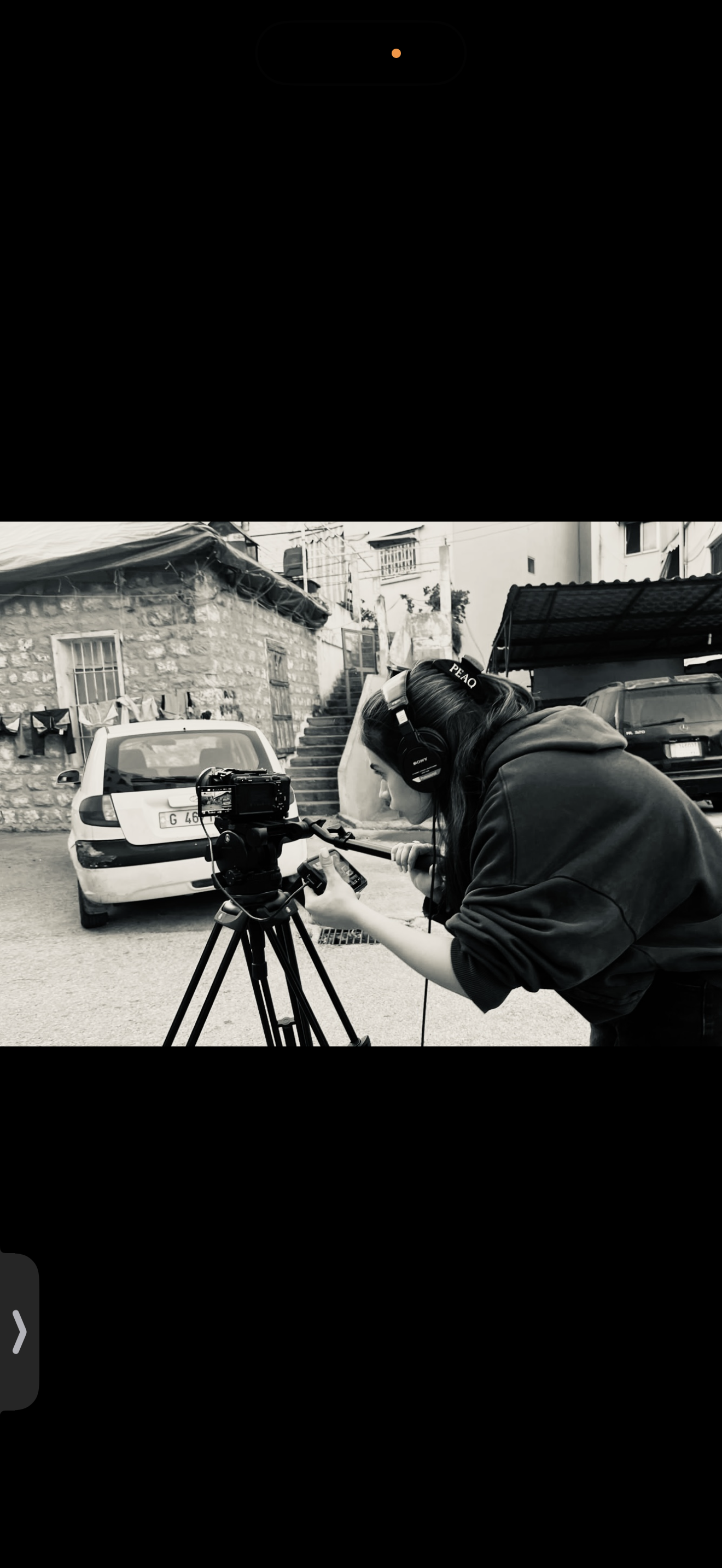
Creating ما كان emerged from a lingering need to capture what once was. The title itself speaks to past states of being and the lingering traces of moments left behind. Through this film, I wanted to explore the delicate boundary between grief and acceptance, observing how everyday spaces retain emotional weight long after events unfold.
wordpress
Drawing Lebanon: Between What Was and What Is
The drawings in this film are not simply records of a place left behind. They are attempts to understand a place that continues to exist, even when the person who once belonged to it is no longer physically there.
Drawing Lebanon became a way of carrying something across borders. Each drawing holds a fragment of a reality that is constantly changing, a moment, a feeling, a detail that might otherwise disappear beneath the distance of time and geography. They were being drawn out of Lebanon, not to remember Lebanon as something finished or belonging exclusively to the past, but to show what it was within what it has become. The intention was never to reconstruct a perfect image of a country through nostalgia. Instead, it was to confront the relationship between memory and the present: what remains, what changes, and what becomes difficult to recognise when seen from somewhere else.
There is a particular distance that comes with leaving. Places continue to exist without you. Streets remain, buildings change, people move forward, and life carries on. Yet, for the person who has left, these places can become suspended somewhere between reality and memory. The drawings attempt to interrupt that suspension. They give physical form to something that cannot always be explained: the strange experience of watching a place evolve while remaining emotionally attached to the version of it that lives within you.
Throughout the film, drawing becomes more than an artistic process. It becomes a conversation between two versions of the same place: Lebanon as it is experienced from a distance and Lebanon as it exists beyond that distance. Each image carries the tension of looking back without wanting to turn everything into the past. It is about acknowledging the present, even when the present is difficult to approach.
But perhaps the most significant moment is the discovery of the final drawing. Unlike the others, this one was made in Lebanon itself. It was drawn at a time when leaving was still a dream, an imagined possibility rather than an accomplished reality. Its existence changes the meaning of everything that came before it.
The drawings that followed were created from the other side of that imagined departure. Yet the last drawing discovered was made before the departure had even happened. It belongs to a moment when the future was still somewhere else, when leaving was something to picture rather than something to live through.
There is something deeply revealing about this reversal. The final drawing is not an ending, but a beginning disguised as one. It reminds us that the desire to leave and the experience of having left are two different realities. One is built on imagination; the other on everything that imagination could never fully anticipate.
Ultimately, this film is not about remembering a country that no longer exists. It is about recognising that a country can exist in several moments at once: in what it was, in what it is, and in what we imagined it would become. Sometimes, the most meaningful image of a place is not the one drawn after leaving, but the one made when leaving was still only a dream.
"Cinema allows us to preserve what time quietly washes away. ما كان is a testament to the shadows that remain within our memories."
Director of ما كان